

MCA Industry Faces Major Exposure
By CJ | Loyola Media Group
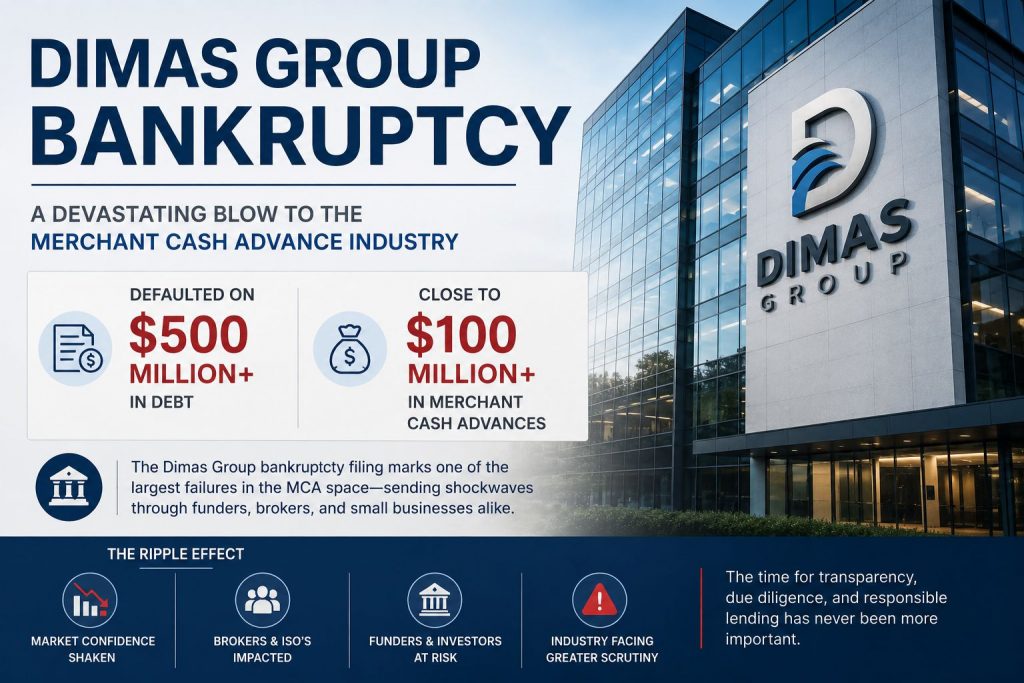
By now, most of you in the MCA space have probably seen the headlines. Simad Holdings — the brothers David and Michael Shabsels, who operated one of the largest networks of Jewish summer camps in the country — filed for Chapter 11 bankruptcy on June 4th. The filing covered 22 overnight camps and 8 day camps across New York, Pennsylvania, New Jersey, and Maine, with estimated liabilities between $500 million and $1 billion.
It is a big story. But here is what the mainstream press is not covering — and what I have been hearing directly from ISO reps in our community on LinkedIn over the past couple of weeks.
The MCA Community Was Already in This File
Multiple ISO reps have been speaking up, and the pattern they are describing is one every funder and broker in this space needs to hear. They have been seeing this file circulating — some as recently as two weeks ago. And here is what makes it particularly revealing: on several occasions, the owners were reportedly asking for the MCA to be structured as a loan, not a merchant cash advance — specifically so there would be no confession of judgment attached to the deal.
Take a moment to consider that.
When a merchant begins negotiating the legal structure of the instrument rather than just the rate and the term, that is not a naive business owner trying to save money. That is someone who understands the difference and has a specific reason to want the protections that come with loan classification. A confession of judgment gives the funder legal teeth. Asking to remove it is asking to remove the funder’s ability to act quickly if things go south. In hindsight, that was a signal.
And it was not just one funder who saw this file. Multiple reps came forward saying they had seen it cross their desk more than once — different funders, different times, same merchant. That is stacking behavior, and it is the kind of thing that only becomes obvious after the bankruptcy filing hits the news.
What the Numbers Actually Look Like
Court filings confirm that Simad owed more than $100 million to cash advance firms and various other short-term lenders. That is a staggering number, and it did not happen overnight. Some contracts even granted these firms direct access to debit the accounts of Simad or its affiliated companies.
One deal that is now part of the court record is particularly illustrative. A Shabsels-controlled entity called Damis Holdings agreed to make 42 weekly payments totaling $15 million in exchange for an upfront advance of just $9.7 million. That is a 1.55 factor rate on a 42-week term. That is not a business getting a lifeline — that is a business that had already exhausted its conventional options.
Meanwhile, court documents show the brothers listed over $500 million in liabilities, even though their camp properties were appraised at $466 million as recently as last December with a projected annual return of 10.5%. On paper, this appeared to be a cash-flow problem sitting on top of real assets. In practice, $34 million had been transferred out of the company and into entities privately owned by the brothers themselves — and when the audit committee asked them to return the funds, the brothers said they were unable to do so.
That money did not evaporate. It was moved.
What This Means for Funders and Brokers
After spending many years in this business, I want to be direct: the red flags were there. They usually are. The problem is that when a deal looks strong on the surface — real assets, recognizable brand names, summer camps that have been operating for decades — it is easy to overlook the behavioral signals underneath.
Here are the flags, in plain language:
The merchant asks to restructure the product. If someone is specifically asking to have an MCA called a loan instead, find out why. That is not a casual preference — there is a reason behind it.
The file keeps coming back around. When ISO reps begin comparing notes and realize they have all seen the same merchant, that is a stacking signal. Our community shares more information than we sometimes realize, and this is exactly when that awareness matters.
The numbers do not match the story. A business with a $466 million asset portfolio should not need 42 weekly payments at a 1.55 factor rate. When the financing terms are extreme relative to the apparent assets, the right question is why that business cannot access conventional capital.
Confession of judgment resistance. A sophisticated borrower who understands the confession of judgment and wants it removed knows exactly what they are signing. That is not a request to dismiss.
This Is Not New — And the Story Goes Beyond the MCA Space
What makes this situation even more alarming is that it does not appear to be an isolated chapter. Globes, a prominent financial newspaper in Israel, recently reported that the Shabsels appear to have traveled to Israel and raised capital there as well — with financial advisors now raising the possibility that assets were double-pledged across multiple lenders on more than one continent. The word being used in those circles is fraud. Not mismanagement. Not poor planning. Fraud.
Israeli financial advisors familiar with the situation have begun discussing the possibility of criminal investigations. If the allegations prove accurate, this was not simply a business that ran out of cash — it was a coordinated effort to raise money from lenders and investors across multiple markets while concealing the true state of the company’s finances and pledging the same assets more than once.
And here is the part that every funder and ISO needs to sit with: this is not new for this company. The Shabsels and their affiliated entities have been the subject of criminal investigations in the past. That information was findable. It was not hidden. This pattern existed before a single MCA was written, before a single weekly payment was debited, before a single dollar crossed the Atlantic to Israeli investors. The history was there. The question is whether anyone looked.
This post is not written to pile on the funders who were caught in this deal. This industry moves fast, and underwriting a well-known camp network with real property behind it is not an irrational decision. But due diligence has to include background — not just balance sheets. A search on the principals behind a deal should be a non-negotiable step before any advance goes out. The point is that the ISO community picked up on something — they were talking about it on LinkedIn, comparing notes, raising flags — and that collective intelligence is one of the most underutilized assets we have.
The Simad situation is still unfolding. A New Jersey bankruptcy judge has approved access to operating accounts for the 30 camps, allowing them to pay staff and open for the summer as planned. The families sending their children to camp this summer will likely be fine. The funders holding $100 million in MCA paper are facing a very different outcome.
Pay attention to what your network is telling you. When multiple reps are seeing the same file, that is not a coincidence — that is data. Treat it as such.