

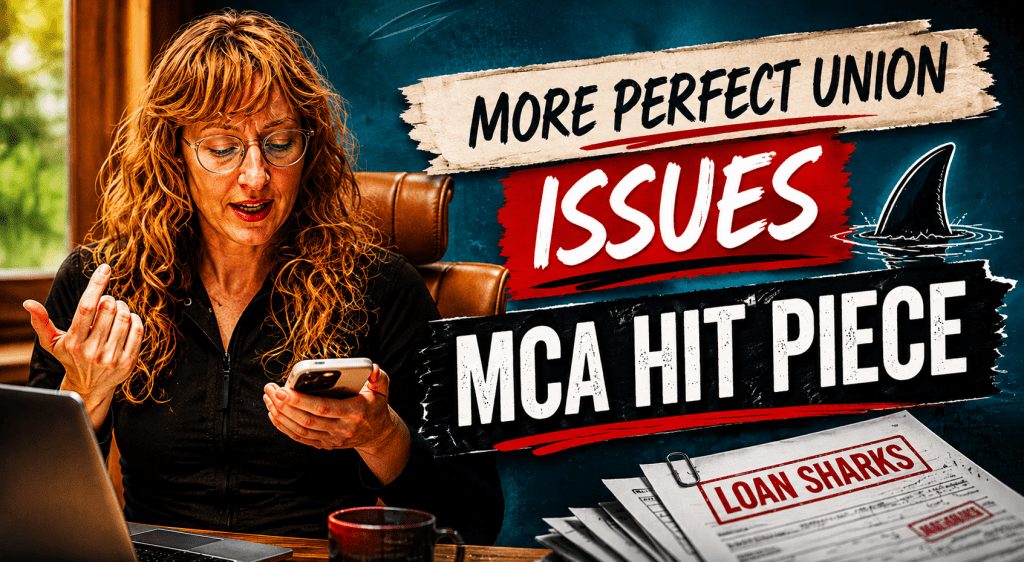
This week, a video circulated from More Perfect Union that took aim at the Merchant Cash Advance (MCA) industry.
The video focused heavily on the volume of spam text messages received by business owners and then moved into interviews with merchants who had previously taken Merchant Cash Advances. In several cases, those business owners described experiences that began positively but eventually led to multiple stacked positions, unmet expectations, and, in some situations, businesses shutting down.
The piece also included commentary from Letitia James’s office, along with a former MCA broker who has since exited the industry. He discussed the evolution of the sales environment and the broader culture surrounding Merchant Cash Advance.
It is worth noting that Letitia James has been one of the most active regulators when it comes to this space. She was responsible for the civil settlement involving Yellowstone and has taken a clear position on Merchant Cash Advance. She does not view these products as purchases of future receivables—she views them as loans and has been consistent in pushing that interpretation.
Her position matters, especially considering how many Merchant Cash Advance companies operate in New York. When she speaks about regulation, it is not theoretical. It is backed by enforcement.
What is often missing from these conversations is the role that responsible brokers and ISO operators play in the market. When structured properly, Merchant Cash Advance can serve as a valuable financial tool for business owners. It can help companies bridge payroll, manage inventory, address short-term cash flow gaps, and support growth initiatives.
Like any financial product, the outcome depends on how it is used and how it is presented.
That brings up an issue the industry should take seriously—how brokers represent themselves publicly, especially on social media.
Most of this activity is happening on platforms like LinkedIn and Instagram. The examples highlighted in the video were largely pulled from Instagram, where the tone tends to be more casual and less measured.
There has been a growing trend of brokers celebrating deals in a way that does not reflect well on the business. Posting terms like “12 points and a PSF,” ringing a gong, or speaking casually about merchants creates the wrong perception. It makes the product look transactional and short-term, rather than structured and purposeful.
More importantly, it exposes the industry to unnecessary scrutiny.
Letitia James, operating out of New York where many MCA companies are based, has already brought civil actions against Merchant Cash Advance companies. These cases have included issues such as excessive pricing, line-of-credit bait-and-switch tactics, and multiple layers of funding that put businesses in difficult positions.
Given that track record, it is worth asking a simple question: if the same behavior continues, what would prevent similar action from being taken again?
Every social media post that highlights aggressive terms, celebrates questionable deals, or speaks carelessly about merchants makes that decision easier for regulators.
There is no benefit in giving regulators additional material to work with.
The opportunity here is straightforward: operate responsibly, communicate with discipline, and present the product the right way. When used correctly, Merchant Cash Advance remains a legitimate and valuable tool for businesses that need access to capital.